Categories
Recipes

Winning Recipe: Carol Shelton Black Magic Cupcakes

INGREDIENTS

1 box Betty Crocker chocolate
fudge cake mix
1/4 cup water (warm to bloom chocolate
and Zin)
1/2 cup canola oil
3 eggs (room temperature)
3/4 cup Carol Shelton Black Magic Late
Harvest Zin
Frosting
2 cups powdered sugar
3 tsp. cocoa powder (I use Ghirardelli)
1 stick of butter (room temperature)
1/4 cup Carol Shelton Black Magic Late
Harvest Dessert Wine

INSTRUCTIONS

  • Preheat the oven to 350 degrees
    (for dark, non-stick pans) or 375
    degrees for shiny metal pans). Add
    cupcake liners or grease bottom and
    sides of the cupcake pans.
  • Combine cake mix, water, oil, and
    eggs in a large bowl. Beat with a mixer
    on medium speed (or vigorously by
    hand) for 2 minutes.
  • Pour into pan and bake 14 to 19
    minutes. Let cool.
    Frosting
  • Sift powdered sugar to remove
    lumps.
  • In the bowl of electric mixer, beat
    stick of butter, powdered sugar and
    cocoa powder until smooth.
  • Frost cupcakes and serve.
    —Recipe courtesy Donna Hisey
Categories
Education Wine Education Wine Wisdom

So……. What’s the difference between Sauvignon Blanc and Fume Blanc? 

Some say the name was changed from Sauvignon Blanc to Fume Blanc because Fume Blanc was an easier name to pronounce. Others say vintners simply used the name they thought customers would like best and therefore would be more likely to buy. Still others say it was a stroke of marketing genius. They are referring to Robert Mondavi, a winemaker, winery owner and a name now synonymous with fine wine from Napa Valley. In the late 1960s Robert Mondavi perceived Sauvignon Blanc to be a bland, uninspiring varietal so he oaked it, in other words, he created a Sauvignon Blanc style that was oak-aged giving it a soft smoke and flint taste. This oak-age is typically obtained by using “neutral” or older blanc oak barrels that are also referred to as white American oak barrels which have been used multiple times, so they do not impart intense flavors of vanilla or toast.

To set his oak-aged Sauvignon Blanc apart, Robert Mondavi essentially rebranded his Sauvignon Blanc by naming it Fume Blanc. He borrowed Fume from Pouilly-Fume, in reference to Pouilly Fume from the Loire Valley. Fume means smoke in French, and “Blanc,” is the French word for white. The term Fumé Blanc, coined by Mondavi, completely changed the perception of Sauvignon Blanc in America and signaled a new, more serious style of Sauvignon Blanc. For decades the term Fume Blanc has been used by wineries in California and Washington to market Sauvignon Blanc and differentiate a style of wine made with oak ageing.

Because Robert Mondavi did not trademark the term Fume Blanc, others could use it and use it they did. For example, the Dry Creek winery calls their Sauvignon Blanc Fume Blanc, yet they do not oak-age their Sauvignon Blanc. Today, Sauvignon Blanc and Fume Blanc are considered synonymous. In addition, today fewer Sauvignon Blancs are labeled Fume Blanc due to changes in the market and marketing.

So, is there a difference between Sauvignon Blanc and Fume Blanc? Both are made from Sauvignon Blanc grapes, yet one answer is, it all comes down to the winemaker’s intention and style.

Sauvignon Blanc is used to produce some excellent white wines, ranging from the light and flinty wines of Sancerre and Pouilly-Fume grown in the Loire Valley, to the pungent and grassy varietal wines of Australia and New Zealand, to the light smokey or tropical tastes from California.

Old World versus New World

In general, Sauvignon Blanc grown in Europe is referred to as Old World and Sauvignon Blanc grown in other countries such as the United States, New Zealand and Australia is referred to as New World.

Color – Old World Sauvignon Blanc has a pale yellow-green to straw yellow color while New World Sauvignon Blanc has a bit darker color.

Aroma – Old world Sauvignon Blanc has an aroma of subtle earthiness, mostly grassy herbaceous fruit of lime and tart apple. New world Sauvignon Blanc has a lush bold fruit character aroma of melon, pear and peach. Sometimes a whiff of the pungency of grapefruit or lime is detected.

Taste – Old World Sauvignon Blanc has a taste of tart, tangy, sour apple with a bit of subtle earthiness while New World Sauvignon Blanc (grown in a warmer climate) has a taste of richer, riper, peach and melon with a little streak of citrus pungency if grown in a slightly cooler climate.

Sauvignon Blanc FUN FACTS:

  • The first Friday in May is International Sauvignon Blanc Day (so don’t forget to celebrate with a glass!).
  • Sauvignon Blanc is one of Taylor Swift’s favorite wines. She enjoys it for its crispness.
  • One of the oldest Sauvignon Blanc plantings in the U.S. is at the Robert Mondavi Winery in their To Kalon Vineyard.
  • Sauvignon Blanc is one of the parents of Cabernet Sauvignon (the other is Cabernet Franc).
  • When a recipe calls for dry white wine, a good quality Sauvignon Blanc is an excellent choice due to its vibrant acidity. Its fresh and light herbal flavor works best for a range of dishes.
  • The name sauvignon comes from the French sauvage meaning wild which is how the vines will grow if unattended.  
  • Sauvignon Blanc is the grape that focused world attention on New Zealand which produces green but light tropical fruit flavors.
  • Sauvignon Blanc originated in the Loire Valley in France. The name “sauvignon” is derived from two French words: sauvage (wild) and vigne (vine). In France, Sauvignon Blanc is a wild growing plant and the shape of its leaves are like those of wild grapevines.

There is no question that Robert Mondavi rooted Fume Blanc as a classic American white wine. With that in mind, don’t wait for International Sauvignon Blanc day in May, raise a glass now and celebrate not only a wondrous wine, but how with a vision, a winemaker changed the destiny of a grape varietal – wow if that doesn’t make you thirsty…

—Linda Flemins,
Wine Education Committee co-chair

Categories
50th Anniversary History Members Corner

Orange County Wine Society Newsletter Through the Years


The first Orange County Wine Society newsletter started with an April 1981 publication entitled Free Run. The inaugural issue (Volume 1, Number 1) stated the newsletter’s intention: ‘It is our intention that the Free Run will keep you aware of meetings, activities, goals and accomplishments of the Society.’

In this first publication there was also an article addressing how the name Free Run was chosen. The organization offered an opportunity for their membership to name their newsletter by conducting a contest. The explanation of the name selection was stated as, “We feel it represents one of our Society goals, the free flow of information about wine appreciation, winemaking and California wines.” 

Although it was only one page, the first Free Run newsletter presented a brief history of the OCWS; an advertisement of an upcoming Home Winemakers Competition; the mention of a Heitz Cellars wine tasting lead by Joe and Alice Heitz; and coverage of a “Marriage of Food and Wine” gathering at Stox II restaurant presented by Mike Grgich, of Grgich Hills Winery. Finally, there was an offer to members to buy a vehicle license plate frame with the message, “Everything’s Fine With WINE” for just $7.50 plus $1.00 for shipping.

After the initial 1981 publication, Free Run reappeared five years later in April 1986.  Jane Goodnight was the publisher and Ronnie Johnson and Nicole Smith were the editors. This second publication covered OCWS’s 10-year anniversary; impressive membership growth from 19 members in July 1976 to over 500 members in April 1986; and a confirmation of the organization’s basic philosophy: to promote the understanding and appreciation of wine, winemaking and viticulture. In addition, the second publication included an “Orange County Fair Exhibit” article that covered the “Jump on Over” theme and OCWS’s co-sponsorship of the Orange County Fair Commercial Wine Competition.

In the mid-1980s once again the membership was asked to name the OCWS newsletter. A contest was held to name the newsletter and the contest winner, Diane Block, was recognized in January 1989 for her prize-winning name, The Wine Press, which still exists today. It was about this time that John Goodnight, a 12-year OCWS  board member (Past President and Treasurer for eight years) took over the newsletter publishing from Sharon Spaulding, Secretary on the Board. Prior to John taking over the newsletter, it was not printed consistently. John wanted to make sure that The Wine Press was printed once a month and that came to fruition. In addition, under John’s watch, graphics from The Wine Press won numerous OC Fair ribbons including the Blue Ribbon First Place and a Best of Show award for the Extraordinaire Program.

John reflected that preparing the newsletter was a monumental task. Articles would be prepared using a Word file then cut and pasted on to “paste-up boards.” The newsletter had four pages of double-sided content and they kept the newsletter to about 8 to 12 pages. John led the preparation of The Wine Press for 17 years – quite impressive.

John consistently included a joke page in the newsletter that was comprised of cartoons and light humor sourced from the web. One person complained to the board, so an article appeared on how a vote was taken resulting in a landslide for keeping the joke page.

A not-so-fun fact was how several times, since the cost of postage kept going up, membership dues had to increase to cover the cost of newsletter printing and postage.

The importance of the newsletter cannot be underestimated. Over the years, not only did The Wine Press keep members aware of meetings, activities, goals and accomplishments but it also assisted in encouraging membership renewal.

Finally, The Wine Press has served as an educational vehicle for sharing the wine knowledge of many members. Today, you can read The Wine Press online and in living color on the website, so take some time to enjoy.

Categories
Members Corner Photo Contest

Photo Contest & Event Candids

Where Spring Meets the Vine
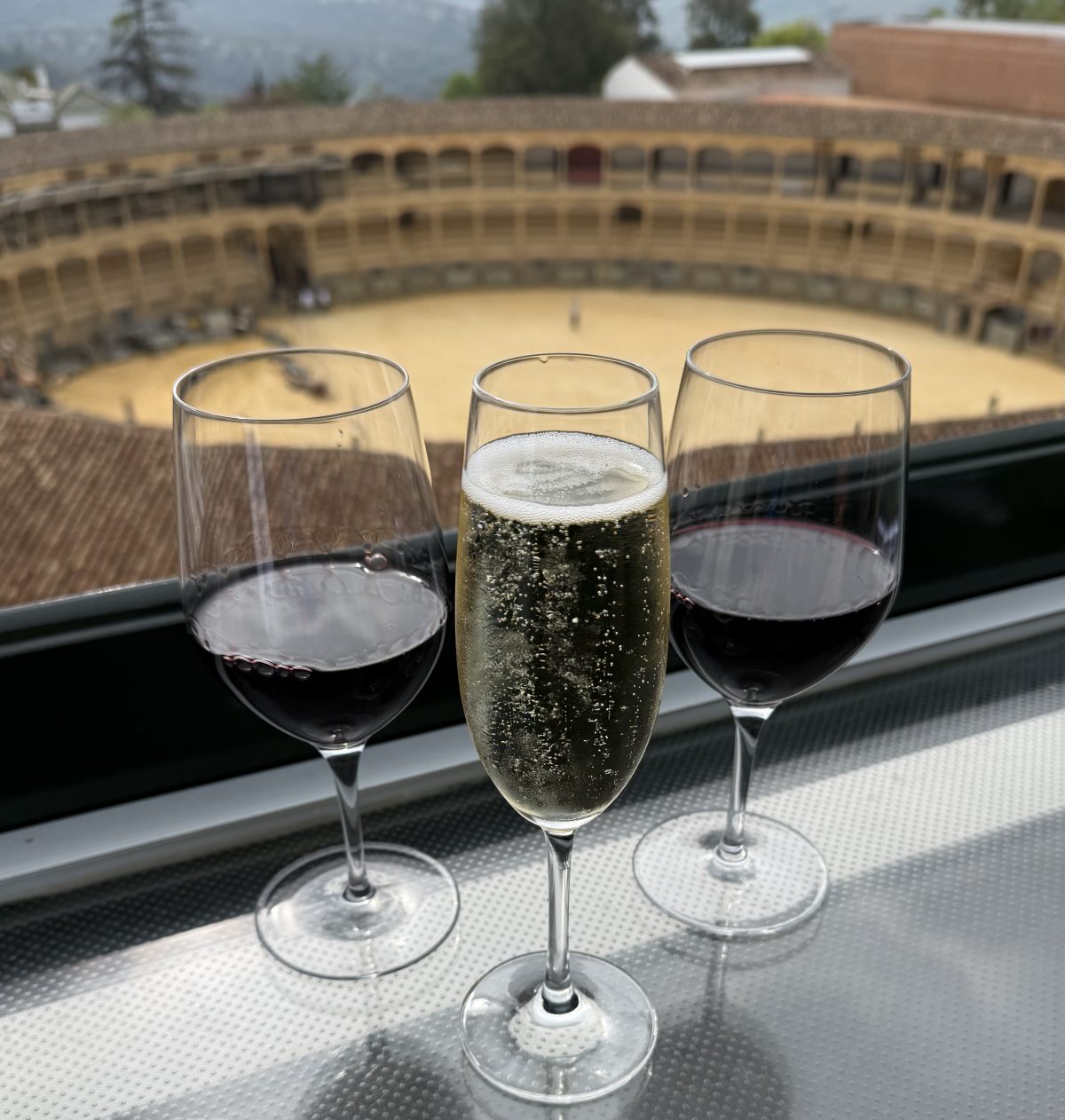
April has arrived and spring is in full swing. The vines are waking up, patios are filling up, and wine always seems to taste better in the fresh air. Capture your April wine moments—whether it’s a relaxed patio pour, a vineyard visit or a quiet glass at sunset. Wherever wine finds you this month, we want to see it.
Each month, the OCWS Photography Committee selects a Photo of the Month featured in the OCWS newsletter and showcased on our website. The winner also will receive a special bottle from the OCWS cellar!
THEME: Wine, Any Way You Pour It
SUBMIT TO: Photo@OCWS.org
RULES: OCWS.org, News, Photos

Wine, Friends & Memories
Feel free to snap some fun, candid moments and share them with us—we’d love to see the event through your lens! These photos are separate from the Photo of the Month Contest (no prizes), but they may be featured in our marketing or on social media. It’s a great way to share your perspective and capture the spirit of our OCWS community.
REMINDERS:

  • By submitting, you grant OCWS rights to use your photos for marketing.
  • Only submit photos that are your own.
  • Send your shots to photo@OCWS.org.
    Let’s celebrate the good times we share.
    A big thank you to everyone who shared their photos. While not every entry can win each month, submissions may be carried over and considered for future features. Keep them coming!
    —Hank Bruce, Arnie Gamboa, Leslie Hodowanec and Sue England,
    Photo Committee

Categories
Featured Member Members Corner

Built for the Bottle

What’s it like for someone who is fortunate enough to blend his love of wine with an occupation of building custom wine cellars?

Just ask Jason Scott who joined the Orange County Wine Society last summer.

The former medical sales representative and a DIY guy landed an opportunity to work in the wine industry when he was hired at Vintage Cellars, a company headquartered in San Diego, which builds luxury wine cellars in a variety of styles, spaces and applications.

Whether the design is traditional, contemporary or modern – or something more unique – the company, which just celebrated its 35th anniversary , works to bring a client’s vision to life.

“Basically we’re making a very large refrigerator and it has to work,” Scott said. “There are so many different options and it really comes down to aesthetics versus capacity.”

Scott, who grew up in Orange County, has been with the company for about five years and has seen a wide array of wine cellars across Southern California. The job is more of a hybrid of sales and design, while dealing with probably the most challenging part of the job – explaining the cost to customers.

“The biggest challenge is having them understand the cost,” he said. “It’s fitting the cellar to what they want and can afford. It’s that expectation and trying to match it to reality.”

Scott said the average cost of a cellar designed and built by his company is around $50,000, but added cellars can be built for less, depending on the space. And for those with no budget … the sky is the limit!

Scott recalls a cellar in Newport Coast that cost $500,000 and another in Rancho Santa Fe that had a 10-foot-high wine wall that was modern and had space for the owner’s magnum bottles. The company also works with wineries who need their own cellar space. Scott said Vintage Cellars is working with Paso-based Daou Family Estates, which has purchased land in southern Tuscany.

Frequently in the higher end homes, Scott says some of his customers don’t care as much about the wine but they know having a wine cellar will help boost a home’s eventual resell value. “It’s kind of expected for certain types of homes,” Scott said

Categories
Commercial Competition Volunteer

President’s Message

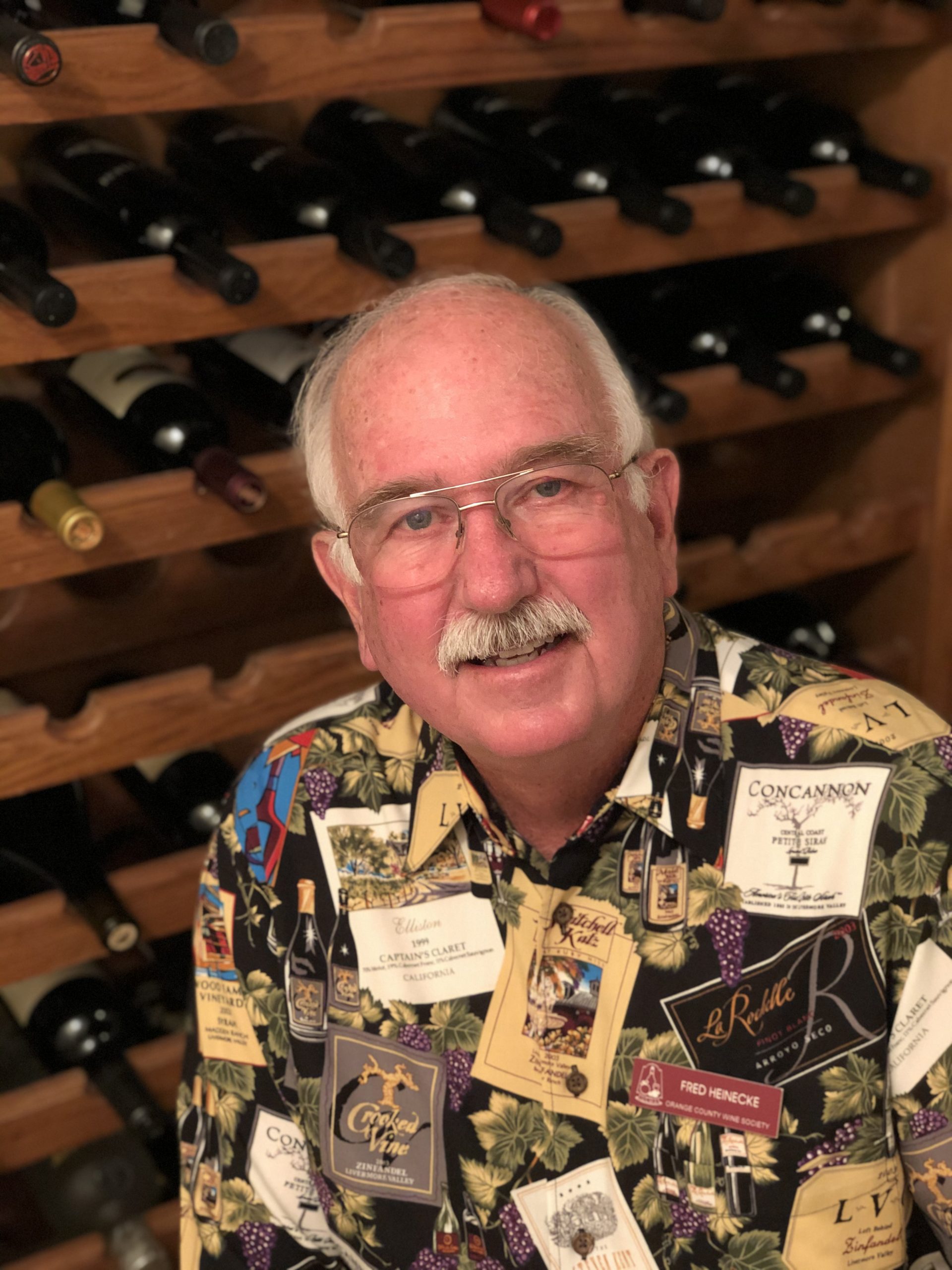
By Fred Heinecke

The 50th annual Orange County Fair Commercial Wine Competition is fast approaching. This marquee event is put on by us, the Orange County Wine Society. The judging will be held May 30and 31 at the Costa Mesa Hilton. Many members volunteer for this huge event that will feature around 2,500 entries with about 100 wine professional judges in panels of five to taste the entries.

There are miles and miles of effort that goes into the logistics of this behemoth event. But the real magic is how all the entries show up in brown paper bags just in the right box and in the right order for the correct judging panel.

The footwork for this near impossible outcome is done by the cataloging crew, headed by Teri and John Lane with past crew chiefs Liz and Lloyd Corbett. The wineries enter their wines online and then ship the entries to the OCWS office. There is no fee to enter; the wineries only need to ship six bottles (yes, you counted right, that is 15,000 bottles of wine to deal with).

The cataloging crew labels each of the six bottles with the correct entry category and a letter A-F. This means, for example, they must know if the 80% Cabernet Sauvignon, 15% Merlot and 5% Malbec goes in as a Cabernet Sauvignon varietal or as a Meritage (this may take a telephone call to the winemaker to confirm their desired category). After the wines are labeled, they are sent to a correctly numbered and lettered box for temporary storage. The A and B boxes are the boxes for the Commercial Wine Competition. The A boxes are for serving the tastes to the judges and the B boxes are transported to the hotel to be available if a bottle has a fault such as a bad cork. Each year we use a handful of the B bottles.

All the boxes are double checked to confirm all the bottles are in the correct box. With the help of the Commercial Competition computer program, the pouring orders are set up with varietals and residual sugar content and new box labels are printed.

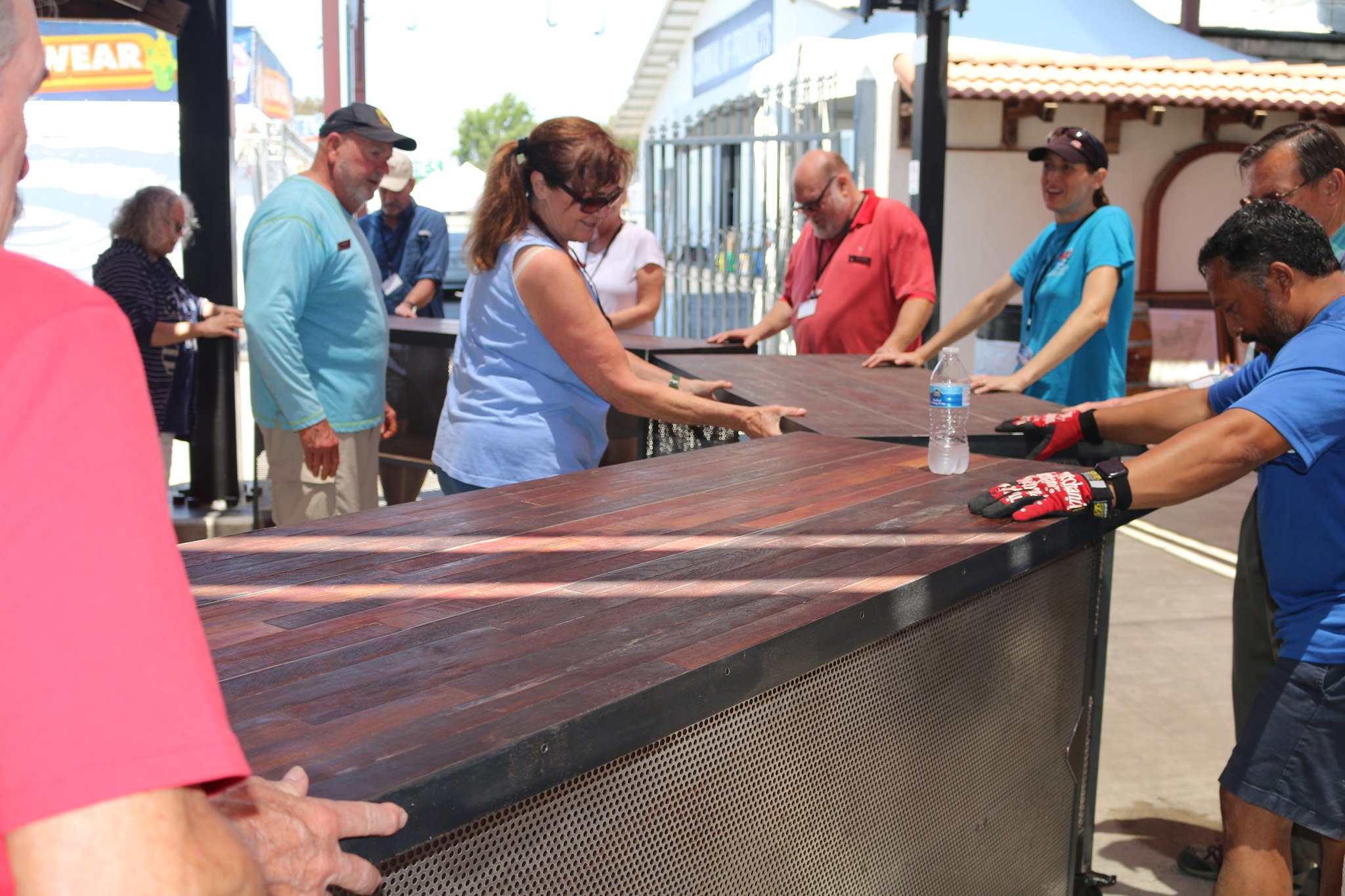
During the week before the competition volunteer crews place the 2,500 or so bottles into the labeled paper bags and get them into their final box that is labeled with the panel number and the day it will be served. On Friday, the 5,000 A and B bottles are transported to the hotel and end up on the correct steward table.

If you want to have some fun, meet other members and interesting wine makers and be amazed how it all comes together, volunteer for the 50th annual Commercial Wine Competition.

Categories
Mini Tastings

South American reds clearly dominate

The results from the Jan. 31 Mini Tasting are in, and it was a dominant night for South American reds. The competition was fierce among the 10 featured wines, but Domaine Bousquet Cabernet Sauvignon from Argentina emerged as the clear victor. Sweeping the board with the top vote in five of six host sites.

Our panel of expert judges were able to identify the crowd-pleasing profile that balanced Argentina’s signature ripeness with the structure of a classic Cabernet.

Taking the second-place silver was another Argentine standout, the El Enemigo Cabernet Franc, which finished five of six sites identifying this wine as their second favorite. This result highlights the rising popularity of Argentine Cabernet Franc, known for its herbal complexity and elegant tannins.

Rounding out the podium in third place was the Nautilus Sauvignon Blanc from New Zealand which was the highest rated white wine of the evening, narrowly edged out the Australian Filius Cabernet Sauvignon by just one point. The Nautilus, is praised for its bright acidity and “textural component,” providing a refreshing counterpoint to the heavier reds that led the pack.

Warranting a mention is the South African Chardonnay from Glenelly, which was the only wine other than the Domaine Bousquet to receive top honors at a host site.

As is typically the case with our group, each of the 10 wines were enjoyed and recognized across the six host sites. Despite the variety of regions represented—from the Uco Valley to Marlborough—the evening ultimately belonged to Argentina, which claimed the top two spots and reaffirmed its status as a powerhouse for bold, high-scoring varietals.

 I hope everyone enjoyed our little trip around the world. While these wines featured grapes we know well, their unique terroir, altitude, and cultural history should have made them feel simultaneously familiar and entirely new. 

—Don Mayer, OCWS Mini-Tasting Chair

Categories
Members Corner

Purveyors of Ports

Described as the perfect prescription for Port lovers since 1979, Prager Ports Works in Napa has been family owned and operated for three generations. Of the third generation, John Prager, along with six siblings, comes from a legacy of not only fine port purveyors, but long-time supporters of the OC Fair Commercial Wine Competition.  John’s father, James Prager, was one of the original judges of the competition for 25 years and John, now following in his father’s footsteps, has been one of our judges for, what will be this year, 15 years. Recently I had an opportunity to chat with John about Prager Port Works, the OC Fair Commercial Wine Competition and the current condition of the wine industry as a whole.

When asked about what he would tell wineries about entering the commercial competition, John was quick to say “Enter your wines, Californians. Enter it. It is inexpensive, as the cost to enter is just 6 bottles of wine. It’s one of the oldest competitions in the state judging your wines. Before Spectator and all the others, they were the original. Come on in. You won’t regret it.”

Reminding John that this year is our 50th Anniversary, he emphatically reassured me that he has all intentions of continuing to judge the most prestigious competition of California wines by saying, “I love that the competition keeps making changes as needed and looks to the judges for advice and input. There are nice changes in the tasting and things are always run professionally and kept current.”

When asked what the best aspects of the wine business are for him, he laughingly shared that “It’s not a bad lifestyle to make alcohol and pair food with it and make a living at it. That’s fun in itself.  People just love the camaraderie, and I get to meet people from all over the world. I never get tired of it.  After 46 years, it’s always interesting and everything comes easier today because I’ve been doing it for such a long time. As long as my dad was doing it. It’s what I know.”

And, lastly, when talking about the current state of the wine industry, John said, “It’s certainly changed over the years and it’s not particularly easy these days. Today’s industry environment is somewhat of a waiting game.  We’re trying to get more noticed on mass media, which seems to be the direction we need to go.  It’s really difficult to know what direction to go these days. There are definitely different challenges in the industry today like us needing to attract new white wine drinkers and, somehow, making wine more approachable.”

Having been to Prager Port Works any number of times over the past 25 years, I can tell you from personal experience, that there is no more approachable winery than Prager nor finer ports to be found anywhere.  With walls covered in currency from around the world stapled on by visitors, along with ribbons and plaques attesting to the caliber of their award-winning wines, and only family tending the business, the Prager tasting room, tucked away along Hwy. 128 near St. Helena in Napa is a welcoming warm hug and one not to missed.

—Fran Gitsham

Categories
Members Corner

President’s Message

By Fred Heinecke

What a great start we had to the 50-year jubilee at the sold-out Orange County Mining Company Champagne brunch. Bubbly is the finest way to celebrate the many years of friendship, wine and fun the Orange County Wine Society represents.

Hats off to Rochelle Randel for making the event a true success.

The 50th Anniversary Committee Chair, Carolyn Christian, came across a budget from 1978 that harkens to the very beginnings of the OCWS. It makes me look at the 2025 expenditures and see the head-spinning difference in the current OCWS and the world today. In 1978 there were nine line-items in the budget, with total expenditures of $3,100.

It’s a little difficult to wrap your head around, but the largest 1978 expense was the OC Fair Commercial Wine Competition at $2,000.  Fast forward to 2025 and multiply by 100, the Commercial Wine Competition expense was right at $192,000. I’m just going out on a limb, but I expect the 48-year-old version didn’t run three days at the Costa Mesa Hilton with almost 100 judges and 100’s of volunteers with 2,500 entries. The total income for the OCWS in 1978 was $5,750, in 2025 it was $680,103 with expenses of $663,476.

This was a long walk, but it brings me to the main point I want to make that I’m sure every member has noted. Over the years the cost of almost everything has skyrocketed. The OCWS Board of Directors and committee chairs and volunteers work to make our events fun and accessible and revenue neutral. Meaning that we try to keep the event costs reasonable without reaching into reserve funds.

It has been a standing board policy to require events to pay for themselves; that is, have the income equal to the expenses. As hotels, restaurants, vendors, and entertainers have increased their prices (the local CPI is up 24.7% since Nov, 2019), the costs that OCWS must pass on have gone up accordingly. We think the OCWS sponsored events are a great value when you consider that most come with wine or no corkage, tips included and are simply great fun!

Upcoming fun-filled wine tastings (noted here in the Wine Press) include free Varietal Hours; Winery Programs with Trentadue & Miro, Macchia, and Dry Creek; and the Spring Social along with fun opportunities to volunteer at the Commercial and Home Wine Competitions and The Courtyard. I hope to see everyone there with a glass of their favorite!

On another note-the OC Fair moving plans changed since the January edition of the Wine Press. We should, by now, be in the new location, but with our portable office trailer located next to the Ranch Building (Building 33). Rochelle Randel and Lynda Edwards will continue to work in the existing office and Teri Lane and the cataloging crew will be in the new building.

Cheers!

Fred Heinecke, President

Categories
Members Corner

2026 OCWS Scholarship Program Update

We are very excited to announce that scholarship donations from late December 2025 have increased our 2026 scholarship allocations total to $50,375.  This additional amount brings our donation total for 2026 to over $1,008,795 since 1981. This continues the OCWS’s long-standing commitment to education and the future of the wine industry by awarding the $50,375 in scholarships to eight outstanding educational institutions across California.

2026 OCWS Scholarship Allocations

University / CollegeProgramAllocation
Allan Hancock CollegeViticulture & Enology$6,000
Cal Poly PomonaAgricultural Science$5,805
Cal Poly San Luis ObispoWine & Viticulture$5,805
CSU FresnoViticulture & Enology$5,805
Orange Coast CollegeCulinary Arts$5,845
UC DavisViticulture & Enology$5,905
Napa Valley CollegeViticulture & Winery Technology$9,405
CSU Sonoma (Cunningham Fund)Wine Business$5,805
Total Disbursements$50, 375

Help Us Keep the Momentum Going

You can support the OCWS Scholarship Fund at any time of the year and be part of shaping the next generation of wine and culinary arts professionals.

Two easy ways to donate:

  1. By Mail – Mail your check to:
    OCWS
    P.O. Box 11059
    Costa Mesa, CA 92627
    Attn: Scholarship Fund
    A donation acknowledgment letter will be sent to you.
  2. Online – Log in to your account at OCWS.org and visit:
    OCWS.org/product/scholarship-donations/
    Donate online and print your tax receipt instantly.

Together, we’ve crossed the $1 million mark—let’s continue building a legacy that supports education, excellence and the future of our industry.

Damian J. Christian, Scholarship Chair