
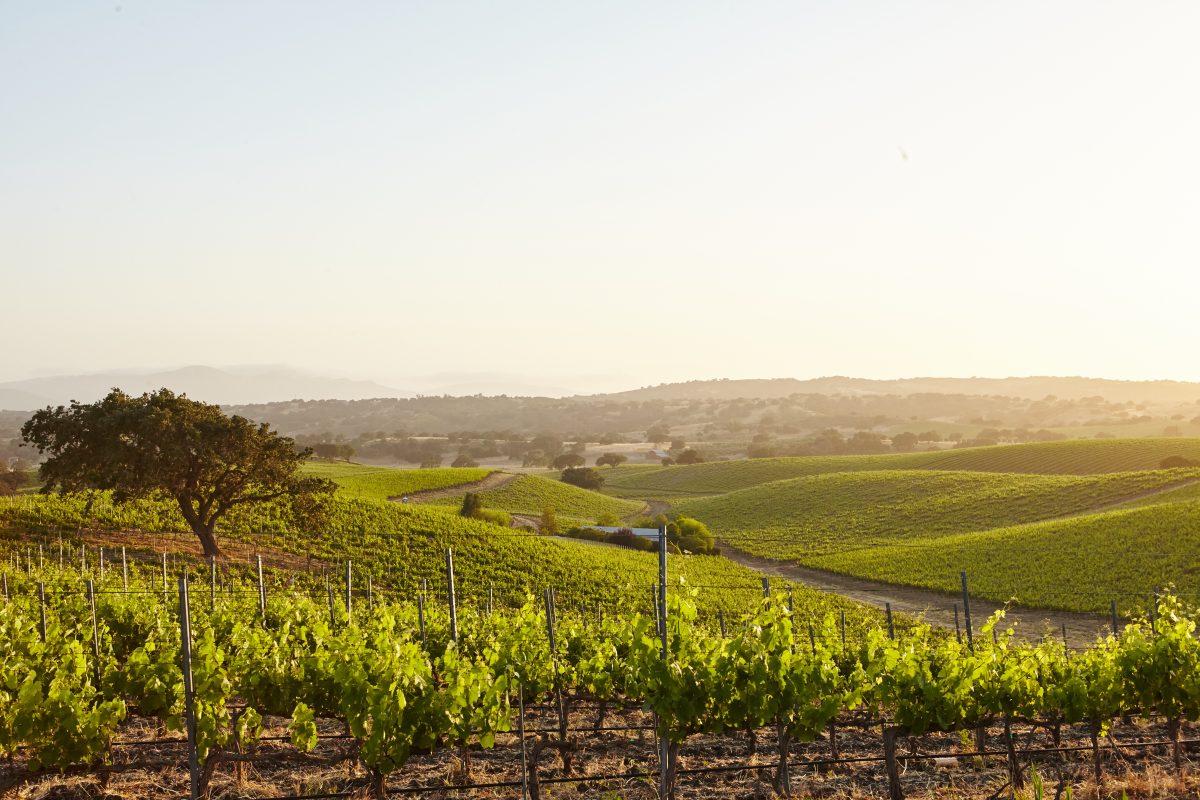
Santa Ynez Valley, the November OCWS wine trip destination is one of the, if not the most physically interesting and unique wine regions in California. The transverse mountain range, the overnight temperature fluctuations that occur in less than 40 miles from one end of the valley to the other, the diversity of the soils, all allowing for more than 60 different vine varietals to be grown, makes it a wine lovers paradise. Whether you will be there in November or some other time, you will be in for a real wine tasting treat.
In the January Wine Press, I wrote about this transverse valley first formed over 23 million years ago. As a result of the twisting and turning, compounded by the San Andreas fault making a turn to the east just four million years ago, the Santa Ynez Valley (SYV) was not blocked by the north-south coastal range but open to the Pacific. The SYV became a cool, foggy tunnel to the interior farmlands. During this same geological period, the ocean floor uplifted leaving behind a widely diverse soil composed of calcareous limestone, sandy soils and clay loams. When the winemakers arrived in the 1800s they realized they had found a vineyard nirvana.
Until the last 60 years, this wine region’s vineyards and winemaking have ebbed and flowed. With the latest winery expansion beginning in the 1960s, the region now has over 120 wineries in its seven recognized American Viticultural Areas (AVAs). Each designated AVA must possess distinctive characteristics of climate, geology and physical features that distinguishes it from any adjacent area. All seven of these AVAs, outlined below, are within the larger Central Coast SANTA AVA, first established in October 1985, extending from San Francisco County to Santa Barbara County.
The Santa Maria Valley AVA, established in August 1981, crosses the border of Santa Barbara County and San Luis Obispo County. The AVA’s characteristic sandy and clay loam soil, coupled with a mild Mediterranean climate as a result of the cool winds and fog from the Pacific Ocean, make it ideal for Pinot Noir and Chardonnay wines. Although grape growing started in the 1830s, it was during the winery expansion of the 1960s that over 100 acres of vineyards were planted to produce grapes to challenge Napa Valley.
The Santa Ynez Valley AVA, established in May 1983 has four sub-regions nested within its boundaries: Santa Rita Hills on the western edge, Ballard Canyon and Los Olivos in the center and Happy Canyon on the eastern edge. Santa Ynez Valley AVA with its east-west orientation benefits from the same cool temperatures as Santa Maria Valley but as you travel eastward it becomes increasingly warmer. Chardonnay is the major grape planted in the cooler western areas, with Rhone varietals more prevalent in the east. The diversity of the climate in the 30 miles of the valley offer the opportunity for vineyards to grow both Bordeaux and Burgundy grapes as well as German varietals.
Santa Rita Hills AVA, established in May 2001, sits at the western end of Santa Ynez Valley (SYV). Santa Rita Hills is the area of SYV that benefits the most from the effects of the transverse orientation of the mountains. Vineyards located here with the cool maritime climate, the various loams and sandy/alluvial soils, make it ideal for Pinot Noir. After all it was Santa Rita Hills’ Pinot Noir that starred in the film Sideways.
Ballard Canyon AVA, established in October 2013, is made up of north-south slopes and canyons. As canyon walls compressed and more faulting occurred the north-south ridges of Ballard Canyon were formed. This area offers a very different microclimate. As a barrier to the Pacific Ocean effect, Ballard Canyon experiences cool, foggy air at its higher elevations, warmer temperatures at its lower elevations and subsequent greater diurnal changes than seen elsewhere in SYV. Ballard Canyon is also affected by wind more than elsewhere in SYV. These unique climatic differences make Ballard Canyon the perfect area for Grenache and Syrah.
Los Olivos District AVA, established in January 2016, lying to the east of Ballard Canyon is a large flat alluvial plain made up of typical SYV soils. The Mediterranean climate is mitigated here due to the distance from the ocean and its surrounding AVAs. With warmer temperatures and smaller diurnal changes vineyards here are producing Bordeaux and Rhone varietals as well as grapes for Spanish and Italian wines. A large number of the SYV’s vineyards, planted in the Los Olivos District, were planted in the 1970s allowing them the informal designation of a “heritage vineyard.”
Happy Canyon of Santa Barbara AVA, the fourth sub-region of SYV, was established in November 2009. Happy Canyon is the furthest east AVA and has the warmest climate. A north-south ridge blocks the Pacific’s winds making this valley 15% warmer. Although the soils are still sand and clay loams, alluvial soils are more prevalent on the canyon bottom. The Bordeaux varietals are most commonly found in the vineyards.
Alisos Canyon AVA, established in August of 2020, is the newest of the AVAs. It is sandwiched between Santa Maria Valley to the north and SYV to the south. Influenced not only by the Pacific Ocean but also by the San Antonio Creek Valley, the AVA has been called the “Goldilocks Rhone Zone,” a term coined by those examining the region’s terroirs and referenced in the AVA’s federal petition. The diurnal swings, the funnel from the Pacific, the not too hot and not too cold meso-climate make it just right for Rhone varietals with Syrah been the most commonly found.
A common maxim, great wine is made in the vineyard, will be not questioned in these AVAs. There will be a wine you like. It could be a great wine. So, sit back, open it and enjoy. Cheers!
–CL Keedy, Wine Education Committee